


The Institute
An urban research institute inside a town planning practice
The Glensburg Cities Institute is the research and publishing arm of Glensburg Town Planners. It studies urban transformation in South Africa and across Africa: how land is allocated and controlled, how housing and infrastructure are delivered, how municipal systems function, and how the planning and built-environment professions shape the result.
The Institute exists because practice raises questions that practice alone cannot answer. A rezoning shows how one municipality applies one by-law. It does not show whether the approach works, how it compares with Nairobi or Kigali, or what it costs the city over twenty years. The Institute pursues those questions with the rigour of academic research and the grounding of a practice that prepares and argues planning applications.
Published in a form that can be cited, argued with, and found again in ten years.
Independence and neutrality
The Institute does not publish client work. Nothing here is commissioned by, or cleared with, the practice’s clients, and nothing is written to win instructions. Where a publication touches a matter the practice has acted in, the text says so.
The Institute is politically neutral. It examines statutes, procedures, finances and outcomes on technical grounds and takes no position on parties, candidates or elections. Where a policy is assessed, it is assessed on evidence and on whether it achieves its stated purpose.
The Institute is a non-profit unit of Glensburg (Pty) Ltd, not a separate legal entity. It is funded by the practice unless a publication states otherwise.
- Lineage
- African Urban Institute, 2017Glensburg Cities Institute since 2020
- Imprint
- Glensburg Pressformerly African Urban Institute Press
- Scope
- South Africa and Africacomparative research across African cities
- Access
- Openessays, working papers and reports are free to read
What we publish
Four formats, each with its own standard
Every Institute publication is dated, numbered where it belongs to a series, and kept at a stable address. The sequence runs from the shortest and most provisional to the longest and most settled, so the format tells you how far the work has travelled.
-
I
Essays
Analytical pieces of three to six thousand words that take a single question, such as a regulatory instrument, a planning system or a comparison between cities, and argue it through with evidence.
GCI EssayDated and referenced, with a stated review date
-
II
Working Papers
Research in progress, published to be argued with. Working papers carry a version number, invite comment, and are superseded rather than deleted when a later version or a journal article appears.
GCI Working PaperNumbered by year, versioned, deposited for citation
-
III
Reports
Structured studies with a stated question, a method, findings and recommendations. Reports may be commissioned by cities, agencies or funders, who are named on the first page.
GCI ReportNumbered by year, method stated, data sources disclosed
-
IV
Books
Long-form argument built over years of research and published by Glensburg Press. The Institute’s most considered statements on how African cities work.
Glensburg PressWith an ISBN. Formerly African Urban Institute Press
Practical guidance for property owners, developers and applicants (guides, briefings, case notes and commentary) is published separately by the practice under Insights. The Institute publishes research on how the system works; the practice publishes advice on how to work within it.
Research themes
Six standing areas of research on African cities
Each theme follows a line of practice. The Institute researches what the firm plans, designs and argues before tribunals, so that the research is grounded and the practice is informed.
-
01
Land, rights and development control
How land use is regulated: zoning schemes and land use management systems, discretionary and rule-based control, the development principles in national planning law, and the tribunals and appeal bodies that decide contested applications.
What does a city gain, and what does it give up, when it decides applications case by case?
- Rezoning
- Consent use
- Tribunal representation
- SPLUMA
-
02
Housing, tenure and settlement
How people are housed, formally and otherwise: tenure forms from freehold and sectional title to informal and customary arrangements, housing types from purpose-built student accommodation to backyard rental, and the regulatory paths that bring settlements into the formal system.
Which tenure and approval routes deliver housing at scale, and at what cost to whom?
- Township establishment
- Sectional title
- Student accommodation
-
03
Infrastructure, services and municipal finance
The networks that decide where growth can go (water, sanitation, energy, roads and transport) and the fiscal instruments that pay for them: development contributions, bulk service charges, rates, grants, and the capacity of municipal budgets to sustain what is approved.
Does the money follow the plan, and does the plan respect the money?
- Development contributions
- Services agreements
- Planning due diligence
-
04
Urban economies and the digital city
How cities earn and trade: industrial and logistics land, retail and office markets, informal and township economies, and the digital platforms and data systems now embedded in urban services, payments, mobility and property. Studied as technical and economic systems rather than as political questions.
What happens to land use, infrastructure and regulation when the economy moves onto platforms?
- Industrial and logistics
- Commercial property
- Urban data
-
05
Environment, heritage and the sustainable city
The balance between the built and the natural environment that gives the firm its name: environmental authorisation and its interface with planning approval, heritage and conservation controls, agricultural land, open-space systems, and the standards by which a city can be called sustainable.
Where should the city stop, and how does the regulatory system decide?
- Agricultural land subdivision
- Heritage
- Environmental authorisation
-
06
The professions and municipal institutions
How planners, architects, engineers and municipal officials shape cities: professional registration and ethics, the organisation of planning departments, decision-making procedures and timeframes, inter-governmental coordination, and the administrative capacity on which every other theme depends.
Most research studies cities. Little of it studies the people who regulate them.
- Professional practice
- Municipal capacity
- Procedure and timeframes
Publications
Featured and recent work
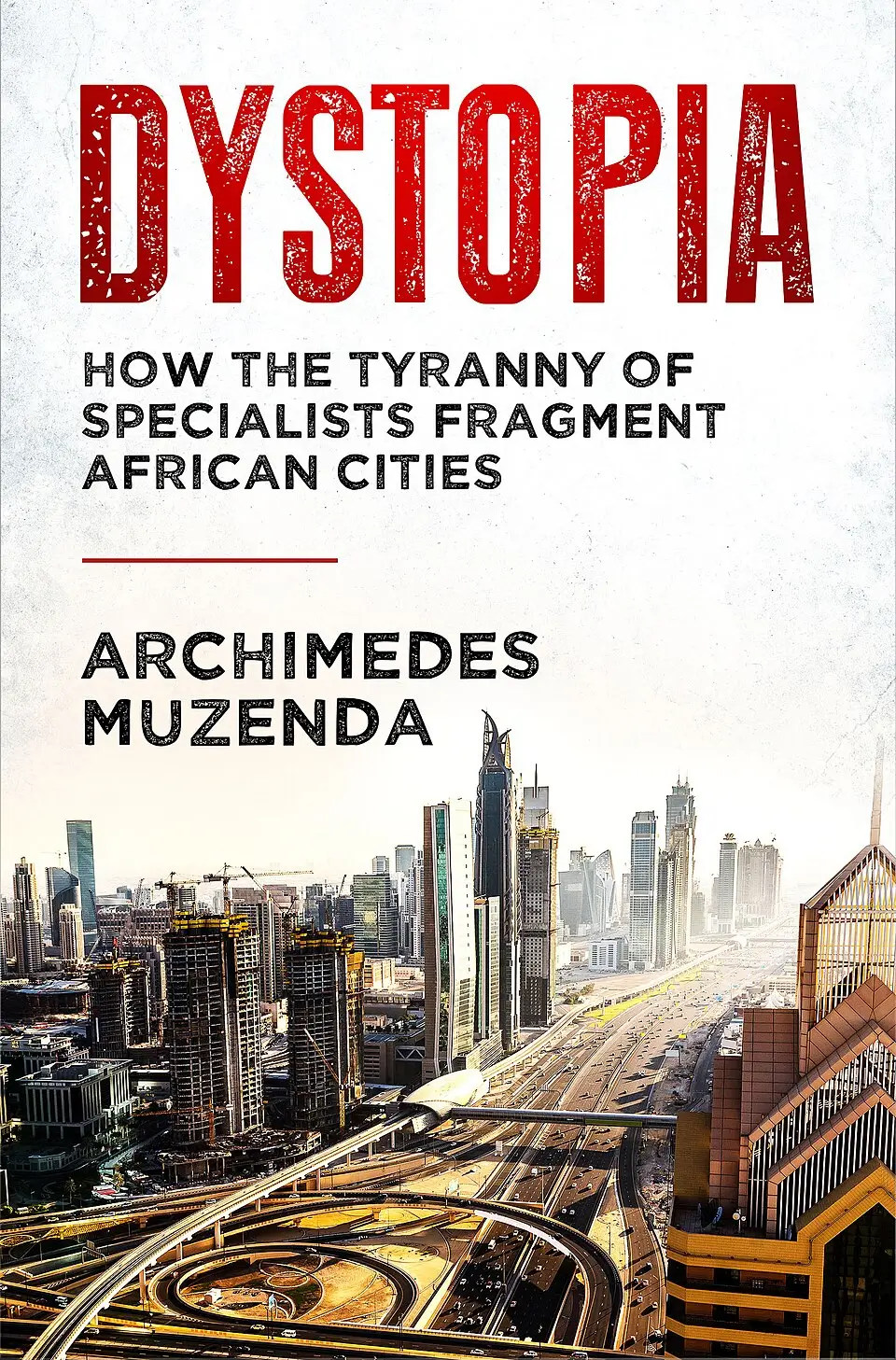
Featured book
Dystopia: How the Tyranny of Specialists Fragment African Cities
Archimedes Muzenda · African Urban Institute Press, 2019 · now Glensburg Press
A study of how specialised professional practice in planning, engineering, architecture and administration fragments the African city by treating it as a set of separate technical problems rather than a single place. The book traces the consequences in land use, infrastructure and governance, and sets out the case for an integrated practice.
-
Essay2026
Discretionary and form-based development control: what three African cities reveal
Nairobi, Kigali and Johannesburg compared · Land, rights and development control
-
Book2019
Dystopia: How the Tyranny of Specialists Fragment African Cities
Glensburg Press · The professions and municipal institutions
Training for African cities
Urban planning practice, taught to the cities that do the work
The Institute offers training to municipal officials, planning authorities, built-environment professionals and development agencies across Africa in the practice of planning, designing and managing cities.
Six programme areas run from the design of buildings and streets to the finance and environmental systems of the whole city. Each is built from the same material the Institute researches and the practice applies.
No two African cities share a planning statute, an administrative structure or a growth pattern, so no programme is delivered as a template. Each is tailored to the commissioning city: its legislation, its institutions, its land and settlement conditions, and the decisions its officials face. Programmes are offered as short courses, as in-house programmes for a single city or authority, and as curricula developed with partner institutions.
Who the programmes are for
- Municipal planning departments
- Planning tribunals and appeal bodies
- Registered and candidate planners
- Architects, engineers and surveyors
- Transport and utility agencies
- Councillors and executive officials
Programme area 01
Architecture and urban design for cities
Architectural planning, building types, street and public-space design, and design review in municipal approval.
Programme area 02
Spatial planning and development control
Master planning, land use management, form-based codes, zoning schemes and the assessment of applications.
Programme area 03
New cities, smart cities and new urbanism
City visioning, the planning of new settlements and extensions, urban data systems, and walkable, mixed-use form.
Programme area 04
Sustainable integrated transport planning
Integrated transport planning and management, public transport networks, non-motorised transport, and the alignment of land use with transport.
Programme area 05
Urban economies, informality and municipal finance
Managing informal trade and settlement, local economic development, municipal budgeting, revenue and capital planning.
Programme area 06
Sustainable cities and environmental planning
Environmental planning for African cities: natural systems, climate resilience, open space, and the standards of a sustainable city.
Editorial standards
How the Institute holds itself to account
These commitments apply to every publication the Institute issues.
- Independence
- No client work. No clearance by clients or funders. Interests are disclosed in the text where a publication touches a matter the practice has acted in.
- Neutrality
- Technical assessment on evidence. No positions on parties, candidates or elections, and no political endorsement in the Institute’s name.
- Funding
- Funded by the practice unless stated. Any outside commissioning body or funder is named on the first page of the publication.
- Review
- Every working paper and report is read by at least one reviewer outside the practice before publication, and the fact of review is recorded.
- Corrections
- Errors are corrected on the page, dated, with the change described. Superseded versions remain available.
- Access and permanence
- Essays, working papers and reports are free to read and download under a stated Creative Commons licence, at stable addresses, with archived PDFs and deposits off the site for citation. Publications are not removed.
Read the full Editorial Standards.
Read the latest work, or bring the Institute to your city
Publications are open to all. Training programmes are developed with the cities and institutions that commission them.
New work by email
One email for each publication. No marketing, no gated downloads.
Media and research enquiries
Journalists, researchers and institutions are welcome to write to the Institute.
Proposals
The Institute considers work by researchers and practitioners beyond the firm whose questions fall within its themes. Send about 300 words: the question, the method and the evidence.