


A Consultancy With a Research Arm
Glensburg is a planning, architecture and development practice based in Illovo, Sandton. It began in 2020 and was incorporated in 2023, and it acts for property owners, developers, architects, attorneys and institutions across eight municipalities — from a house and a cottage on one erf to a township of several hundred homes. It is also a publisher. Glensburg Cities Institute is the practice’s research arm, and what it reads — schemes, by-laws, policy and judgments — is what sits behind the advice we give. That is the argument for a small practice: the same people follow the frameworks, argue the applications, and answer for the outcome.
How We Practise
We tell clients when not to apply. An application that will fail costs more than the advice that prevents it, and a practice that never says no is not advising — it is invoicing.
Things You Can Hold Us To
Most firms publish values. These are commitments, each one is something a client could point at if we failed to do it.
Evidence before advocacy
We establish what the land permits — zoning, title, approvals, services — before arguing for what it could. An argument is only as good as the position it starts from.
An early no beats a late yes
Where an application will not succeed, we say so before it is lodged. Nobody has ever thanked us for the fee on a refusal we could see coming.
One team, three disciplines
Planning, architecture and development advice from the same people, so the drawing matches the rights and the feasibility matches both.
The version in force
Schemes are replaced and by-laws amended more often than practice habits change. Every matter starts by confirming which framework governs the site, and which amendment.
Research feeds practice
What we publish and what we argue come from the same reading. The Institute is not marketing; it is how the practice stays current.
Three Disciplines, One Instruction
Most schemes need more than one of these, and they go best when they are not three separate appointments arguing past each other.
Town Planning
Rezoning, subdivision, consent use and township establishment — and the compliance work that follows when something has already gone wrong.
Architecture & Design
Building plans, site development plans and submissions — drawn to what the rights allow, rather than discovered at building control to exceed them.
Property Development
Feasibility before a price is agreed, due diligence before transfer, and the structure a scheme will be sold under.
Nineteen services in all, and most matters use two or three of them. Which ones your property needs is established at assessment, before anything is lodged.
Who Does the Work
Glensburg is a boutique practice, and that has one practical consequence: the planner you speak to at the first consultation is the planner who argues your application.
A registered planner leads every matter
From the first consultation to the decision, and before the Tribunal if the matter is referred. No handover to a junior once the fee is agreed.
Architectural work is done under SACAP registration
Building plans, site development plans and submissions, drawn by the same team that argued the rights they have to fit.
Specialists are briefed and coordinated
Traffic, environmental, engineering and land surveying — appointed where an application needs them, and managed so their work answers the planning question.
Every matter is tracked in Glensburg Studio
The stage a matter has reached, what is outstanding and what comes next — visible to you, rather than reported when you ask.
Where we are not the right practice for a matter, too specialised, too far from where we work, or better served by a larger team, we say so, and point you elsewhere where we can.
The Cities Institute Institute
Glensburg Cities Institute is the practice’s research and publishing arm. It studies how African cities are planned, regulated and built, and publishes that work under our imprint, Glensburg Press.
The same reading sits behind both. Schemes are replaced, by-laws amended and policy rewritten faster than practice habits change, and a firm that reads only what the matter in front of it requires soon starts giving last year’s advice. What the Institute follows is what informs the argument in your application. A practice that has published a critique of its own profession is unlikely to give you the profession’s stock answer.
Featured publication
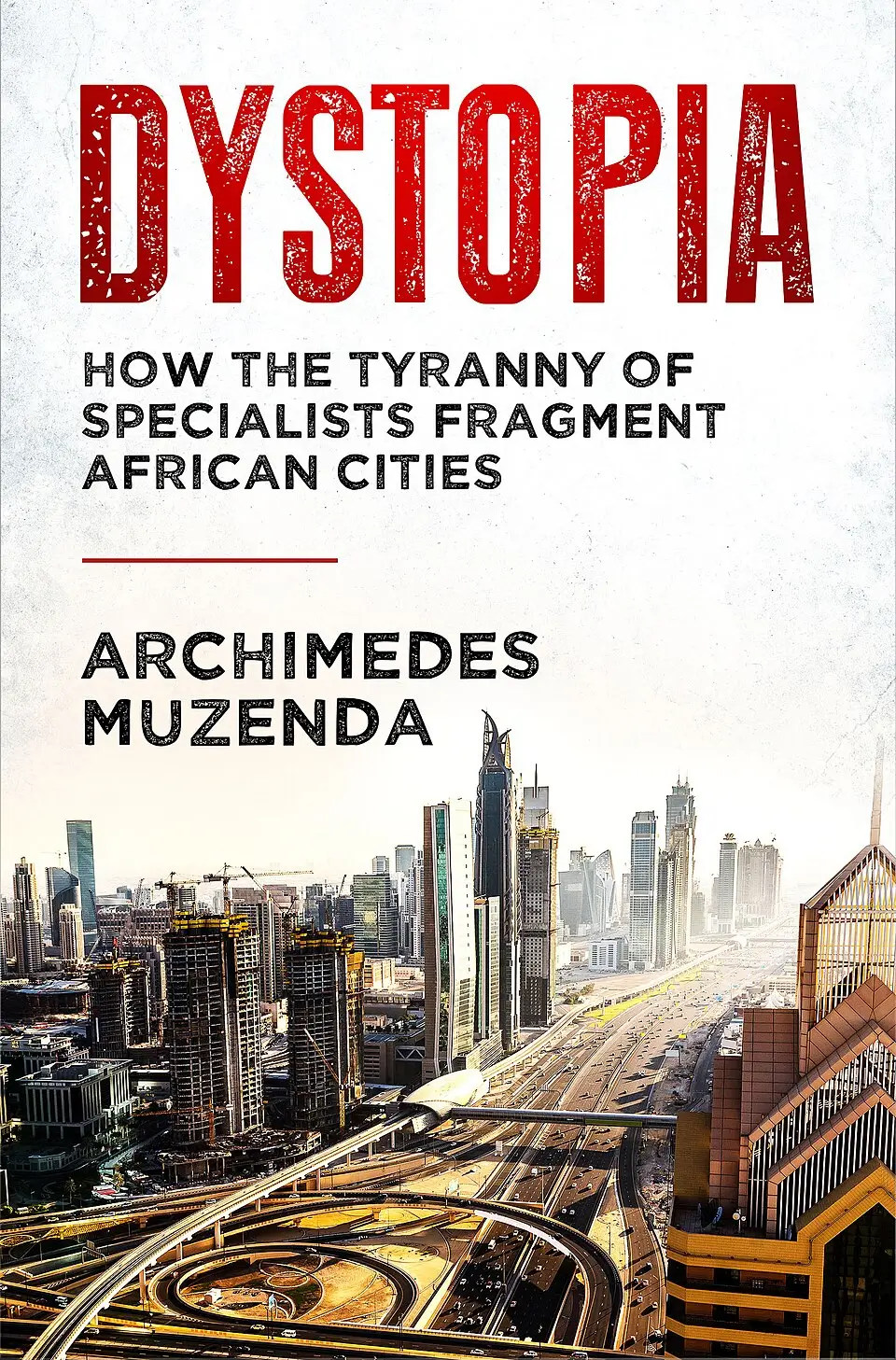
Dystopia
How the Tyranny of Specialists Fragment African Cities
A critique of how professional practice, planning included, has fragmented African cities.
First published in 2019 by African Urban Institute Press, now Glensburg Press.
What We Work On, and Where
Two questions decide every application: what kind of project it is, and which municipality it sits in. These are the ranges we cover.
Industries
Residential · Commercial · Industrial · Institutional · Specialised
Eighteen kinds of project, from a house and a cottage on one erf to data centres, student accommodation and agro-industry.
IndustriesWhere we work
Johannesburg · Tshwane · Ekurhuleni · Midvaal · Mogale City · Cape Town · eThekwini · Mahikeng
Eight municipalities in four provinces, each under its own planning by-law and land use scheme.
Where We WorkSector and municipality change what an application must answer. They do not change how it is run: every matter follows the same five stages, from assessment through evidence to the decision, and to the Municipal Planning Tribunal where it is referred.
Questions about the Practice
What clients ask about the practice before they instruct it.
Glensburg began in 2020 and was incorporated in 2023. That is the age of the company. What matters more is who does the work — planners and architects registered with SACPLAN and SACAP, whose registrations anyone can check on the councils' public registers. A firm's age tells you how long it has been trading, not whether it will read your title deed properly.
A registered planner, from the first consultation to the decision, and before the Municipal Planning Tribunal if the application is referred. We are deliberately small, so there is no handover to a junior once a fee is agreed. Where a matter needs a traffic engineer, an environmental practitioner or a land surveyor, we brief and coordinate them — they are separate appointments with their own fees.
Yes. Planning work is done by planners registered with SACPLAN, and architectural work under SACAP registration. Both professions are regulated by statute — the Planning Profession Act for planners, the Architectural Profession Act for architects — and both councils keep public registers.
Yes, and it is the point of the practice. Building plans, site development plans and submissions are drawn under SACAP registration by the same team that argued the rights those drawings have to fit. A good share of what gets refused at building control is a drawing that exceeds rights nobody checked, which is harder to do when one firm holds both.
Yes. A building line relaxation, a consent use for a guest house, a house and cottage to be sectioned — these are the matters larger firms treat as overheads, and we treat as work. They are also where honest advice matters most, because the fee is a larger share of what is at stake.
It keeps the advice current. Tshwane adopted a new land use scheme in 2024, Johannesburg amended its planning by-law the same year, and Cape Town's latest amendment took effect in October 2025. A practice that reads only for the matter in front of it misses those. What the Institute follows is what informs the argument we make for you.
Yes — Cape Town, eThekwini and Mahikeng, alongside the five Gauteng municipalities. Outside Gauteng we work to the local by-law and land use scheme rather than to Gauteng practice, and the Where We Work page sets out the instruments in force in each.
We do not promise approvals. No planner can, because the decision belongs to the municipality or the Tribunal. We do not lodge applications we expect to fail, and we say so before a fee is agreed. And we do not advise outside our registration — on questions of law we will tell you to ask an attorney, and on structural or engineering questions, the relevant professional.
Speak to a Planner
Tell us about the property and what you want to do with it. The first consultation is free and carries no obligation, we will tell you what the land permits, what an application would involve, and whether it is worth making.
35 Fricker Road, Illovo, Sandton · Practising since 2020