
Key Takeaways
- The Opportunity: High rental demand returning to Rosebank/Sandton (“Reverse Semigration”).
- The Risk: The “Commando System” water network is capping development in the West (Melville/Auckland Park) until April 2026.
- The Cost: New “User-Pays” policies mean developers must budget ~R65k/unit for bulk contributions.
- The Strategy: Buy in “Hydraulically Secure” nodes; hold off on “Red Zone” transfers until Q2 2026.
The narrative for Johannesburg in 2026 is no longer about “decay” versus “renewal.” It is about capacity. While Cape Town battles a sewage bottleneck, Johannesburg is fighting a war of hydraulics.
For the investor, the city has bifurcated into two distinct markets: the “Hydraulically Secure” (fed by independent reservoirs or private infrastructure) and the “Red Zones” (suburbs held hostage by the Commando System until late 2026). This guide maps the specific “Hard Constraints” defining property rights in 2026.
1. The “Reverse Semigration” & The Demand Paradox
Contrary to the “flight to the coast” narrative, Johannesburg is absorbing a massive influx of returning human capital.
- The Data: The 2025/26 Integrated Development Plan (IDP) confirms that Johannesburg is managing a population growth surge, largely driven by the “Return to Office” mandates which have revitalized the Sandton-Rosebank axis.
- The Paradox: We have high tenant demand in nodes like Melville, Auckland Park, and Westdene (driven by UJ/Wits students and young professionals), but zero infrastructure capacity to support new density.
- The Result: A rental squeeze. In constrained nodes, existing compliant properties are seeing rental inflation, while vacant land sits effectively sterilized by the water crisis.
2. The “Red Zone”: Mapping the Commando System Moratorium
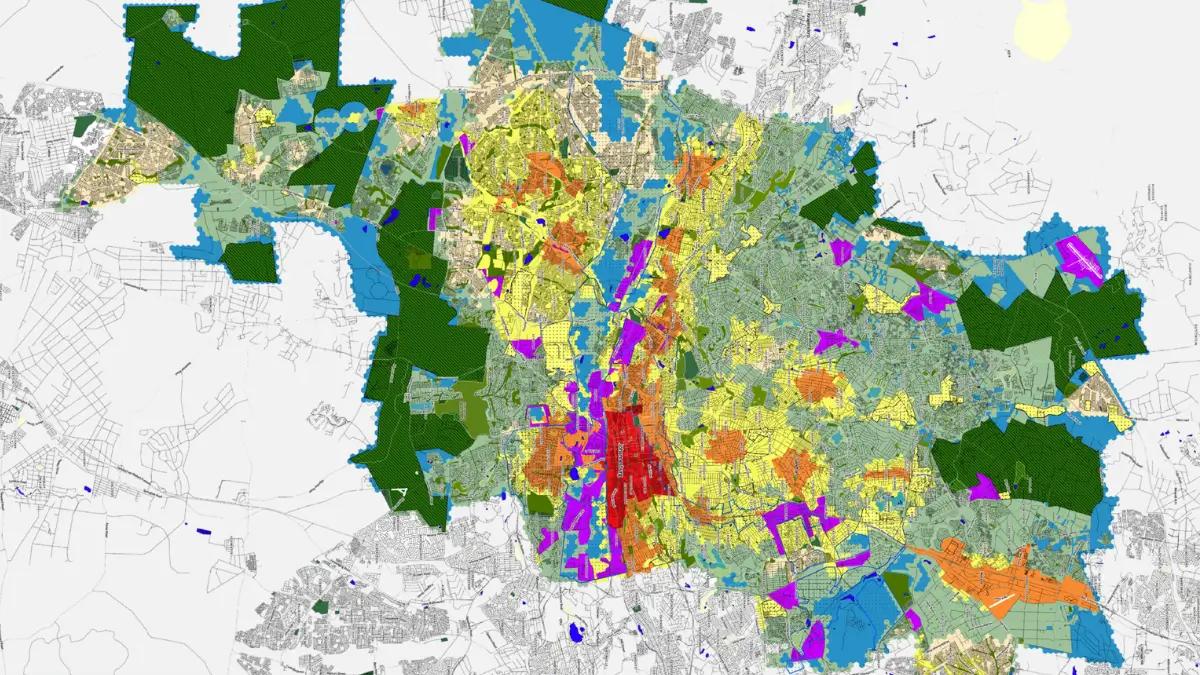
The single biggest risk to any development in Johannesburg’s West and South-West is the Commando System. This network, fed by the Brixton, Hurst Hill, and Crosby reservoirs, is currently operating at a deficit.
The “No-Go” Suburbs (The Red List)
Investors should treat the following suburbs as “High Risk” for new zoning applications or density increases until the infrastructure comes online:
- Coronationville & Westbury (Severe restrictions).
- Melville & Auckland Park (High student demand, but frequent outages due to bypass).
- Westdene & Sophiatown.
- Industria North & Delarey (Logistics risk due to fire safety compliance failures).
The Critical Timeline (The “April 2026” Window)
Town Planning rights are useless without water. Here is the verified engineering timeline:
- Hurst Hill 2 Reservoir: Refurbishment began 1 December 2025. Completion is scheduled for 9 April 2026.
- Hurst Hill 1 Reservoir: Completion only expected October 2026.
- Crosby Pump Station: Upgrades finalized December 2026.
Strategic Insight: If you are buying development land in the “Commando” zone today, your transfer and Regulation 38 certificate will likely be delayed until Q2 2026. Factor this “holding cost” into your feasibility.
3. Policy Watch: The “User-Pays” Era
Two major policy instruments are reshaping the cost of doing business in Joburg in 2026.
The Development Contributions (DC) Policy
The City has moved decisively to levy “Development Contributions” on a user-pay principle to fund external bulk engineering.
- The Impact: The days of the City funding bulk upgrades are over. Developers must now front-load capital for external engineering services (roads, water, sewer, power).
- The Cost: In densification zones (like the new “Nodal Review” areas), developers should budget between R50,000 and R85,000 per unit in DCs. This fee is payable before rights are enacted, acting as a significant barrier to entry for smaller developers.
- The Risk: This fee is non-negotiable and directly impacts the feasibility of “affordable” housing projects.
The Nodal Review & Inclusionary Housing
The City has replaced the old “Consolidation Zones” with a new “Development Nodes” framework.
- The Shift: Density is no longer just about being “near a road.” It is about being in a “Transformation Zone”.
- The 20% Rule: Any residential development of 10 units or more must include at least 20% inclusionary housing (capped rentals/sales).
- The Trap: Being in a “Restructuring Zone” (Social Housing zone) does not guarantee water capacity. You can have the zoning right (policy) but be refused the connection (engineering).
4. The “Regulation 38” Trap
In Johannesburg, the most dangerous document is not the Title Deed, but the Regulation 38 Certificate (Section 82 in the new by-law).
- What it is: The “Clearance Certificate” issued by the Council confirming all conditions of title (including engineering services) are met. Without it, you cannot transfer a single subdivided unit.
- The 2026 Risk: In “Red Zone” suburbs, the Johannesburg Roads Agency (JRA) and Joburg Water are frequently withholding clearances due to grid incapacity or the lack of upgraded bulk contributions.
- The Nightmare Scenario: A developer finishes a block of 20 flats in Westdene. Tenants move in. But because Hurst Hill 2 isn’t finished, Joburg Water refuses the final connection. The developer cannot transfer units to buyers, remaining liable for the bulk bond while collecting only rental income.
5. Johannesburg Investment Matrix 2026
| Node / Zone | Asset Class | Verdict | The “Glensburg” Rationale |
|---|---|---|---|
| Rosebank / Illovo | Luxury Residential | BUY | The “Safe Haven.” Fed by the Sandton system (more stable). High corporate demand due to return-to-office policies. |
| Melville / Auckland Park | Student Housing | CAUTION | High Yield / High Risk. Incredible demand, but the “Commando System” risk creates operational nightmares (need 3-day water backup). |
| Aeroton / Industria | Logistics | AVOID | Located in the “Red Zone” of the Commando System. Water outages cripple fire-safety compliance for industrial tenants. |
| Lanseria / Fourways | Mixed Use | BUY | The “New North.” Lanseria is a “Strategic Development Area” with prioritized infrastructure investment. |
Disclaimer
Because every property has unique zoning constraints and municipal bylaws are subject to change, this article serves as a general guide rather than site-specific counsel. See our Editorial Policy