Johannesburg

Developing property in the City of Johannesburg requires statutory knowledge, strategic foresight, and an intricate understanding of municipal frameworks. At Glensburg Town Planners, we provide industry-leading town planning and land use management services tailored to developers, property owners, and corporate institutions across the Johannesburg metropolitan region.

Our professional accreditation:

Strategically positioned in Illovo, serving Johannesburg Metropolitan Region

Operating from our headquarters at 35 Fricker Road, Illovo, we are strategically positioned at the nexus of Johannesburg’s primary economic hubs; Sandton and Rosebank. This prime location allows us to maintain a finger on the pulse of the city’s commercial property trends while ensuring rapid, seamless access to the City of Johannesburg’s Development Planning offices in Braamfontein. Whether you are developing a high-density residential complex in Midrand, pursuing commercial rezoning in Randburg, or establishing a new township in the city’s expanding nodes, Glensburg delivers precision-engineered planning solutions.

Rezoning and Land Use Amendments

Unlocking the true commercial or residential value of a property requires successfully navigating the City of Johannesburg Land Use Scheme, 2018. We handle the entire end-to-end rezoning process, seamlessly converting property rights from residential to commercial, industrial, or mixed-use.

Township Establishment and Subdivision

We manage Township Establishments: Guiding large-scale developments on agricultural or unproclaimed land through the requirements of SPLUMA. Also Subdivisions and Consolidations: Dividing large erven to maximize yield or consolidating adjacent properties to create unified, highly profitable development parcels.

Consent Use Applications

When a full rezoning is not required, we expertly draft and facilitate Consent Use applications. In strict accordance with the City of Johannesburg Municipal Planning By-law, 2016 (as amended, 2023), we secure secondary rights for properties, such as guest houses, communes, early childhood development centers, and places of instruction.

Regions We Actively Serve

While our offices are anchored in Illovo, Sandton, our operational footprint covers all administrative regions within the City of Johannesburg Metropolitan Municipality (Regions A through G), including:

Covering Johannesburg’s rapidly expanding northern boundary, we facilitate major township establishments and large-scale commercial rezonings. Our primary service nodes in this high-growth corridor include the premium developments of Midrand, Waterfall City, Fourways, Kyalami, and the emerging Lanseria Aerotropolis precinct.

Anchored by some of Johannesburg’s most established economic nodes, we manage complex land use amendments, densification projects, and heritage-sensitive applications. Our active focus areas encompass the thriving Rosebank commercial district, Randburg, Northcliff, and the affluent suburbs of Parktown North and Craighall.

Anchored by some of Johannesburg’s most established economic nodes, we manage complex land use amendments, densification projects, and heritage-sensitive applications. Our active focus areas encompass the thriving Rosebank commercial district, Randburg, Northcliff, and the affluent suburbs of Parktown North and Craighall.

Spanning the western edge of the metropolitan area, we assist property developers in maximizing yields through strategic subdivision, consent use, and commercial rezoning. Key high-value service areas include Roodepoort, the upscale estates of Ruimsig, Constantia Kloof, and the rapidly developing Honeydew business precincts.

Focused on formalizing residential expansions and developing emerging commercial retail centers, we provide precise statutory planning services in the city’s south-western quadrant. We actively support commercial property owners, retailers, and private investors in key economic hubs such as Protea Glen, Jabulani, and Orlando West.

Operating directly from our Illovo headquarters, we dominate statutory planning within Johannesburg’s most lucrative financial and corporate belt. We specialize in high-density residential and high-rise commercial land use applications across Sandton Central, Morningside, Melrose Arch, Houghton Estate, and Illovo.

Navigating the complexities of inner-city urban renewal and industrial expansion, we guide institutional investors through intricate municipal frameworks. Our strategic focus remains on high-yield commercial regeneration and heavy industrial zones, specifically servicing Braamfontein, Newtown, Marshalltown, and the City Deep logistics hub.

Covering the southern development corridors, we unlock land value through strategic greenfield township establishments and complex rezoning applications. We actively serve the premium residential estates and growing commercial centers of Glenvista, Bassonia, Lenasia, and the broader upscale Johannesburg South district.

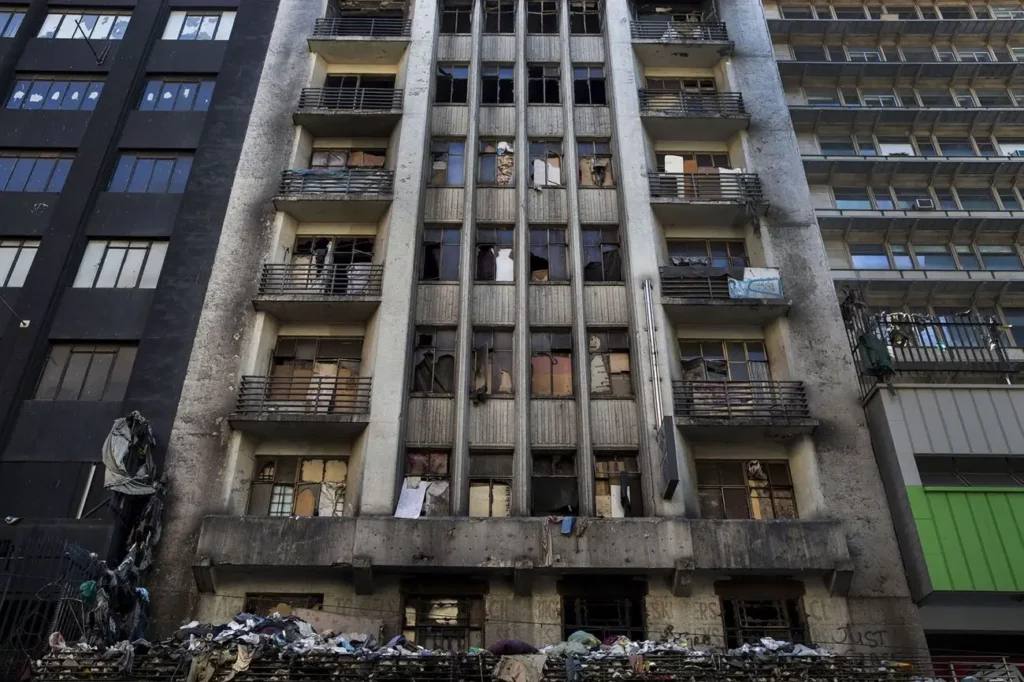
A low-angle view of the Nelson Mandela Bridge in Johannesburg, representing the inner-city urban regeneration and commercial nodes served by Glensburg Town Planners.

Johannesburg Insights

Stay ahead of the curve with our latest analysis on town planning and property development in Johannesburg metropolitan region. We distill statutory shifts into actionable insights to inform your next property development decision.

Town Planning in Johannesburg Insights

Securing development rights within the City of Johannesburg requires a precise understanding of municipal by-laws and spatial frameworks. To assist our clients, we have detailed the answers to the most critical statutory planning inquiries below. Explore these expert insights to better navigate the timelines, legal processes, and technical requirements for your next property investment.

The rezoning process within the City of Johannesburg (CoJ) requires patience and strategic foresight. Typically, a rezoning application takes between 6 to 12 months from the date of submission to final promulgation, depending largely on the complexity of the development and municipal workloads. The timeline is dictated by the statutory requirements set out in the Spatial Planning and Land Use Management Act (SPLUMA) and the CoJ Municipal Planning By-law, 2016. The initial phase involves compiling technical documents, including a motivational memorandum, site development plans, and traffic impact assessments. Once submitted, the mandatory public participation process requires advertising the application for 28 days, allowing neighbors and stakeholders to submit comments or objections. If formal objections are lodged, the application must be referred to the Municipal Planning Tribunal (MPT) for a hearing, which can add several months to the timeline. Working with an experienced town planner ensures that applications are legally watertight and actively managed, significantly mitigating unnecessary administrative delays.

Submitting a rezoning application to the City of Johannesburg requires a comprehensive, legally compliant portfolio of documents as mandated by the CoJ Municipal Planning By-law, 2016. The foundation of any application is a meticulously researched Motivational Memorandum, which provides the spatial, economic, and legal justification for the proposed land use change. Alongside this, the applicant must provide a registered Title Deed, an up-to-date Zoning Certificate, and a Locality Plan that clearly situates the property within its broader urban context. If the property is owned by a company or a trust, a formal Company Resolution and Power of Attorney are mandatory to authorize the town planner to act on the owner’s behalf. Furthermore, the submission must include a Site Development Plan (SDP) detailing the proposed building footprints, parking layouts, and access points. Depending on the scale of the proposed development, the municipality may also require specialized technical studies, such as a Traffic Impact Assessment (TIA) or Geotechnical Reports.

Understanding the distinction between a Consent Use and a Rezoning application is critical for property owners navigating the City of Johannesburg Land Use Scheme, 2018. Rezoning is a permanent, statutory alteration of a property’s primary land use category. For example, changing the zoning entirely from “Residential 1” to “Business 1” to accommodate a corporate office block. This is a rigorous, time-intensive process that permanently changes development controls, such as Floor Area Ratio (FAR), coverage, and density. Conversely, a Consent Use application grants permission for a specific, secondary land use without altering the property’s underlying, primary zoning. For instance, a homeowner might apply for a Consent Use to legally operate a guesthouse or an early childhood development centre on a “Residential 1” property. While rezoning rights are permanent, consent use rights are often conditionally granted and can lapse if not utilized within a specific municipal timeframe. Selecting the correct application type is essential for optimizing costs and approval timelines.

Township Establishment is a multi-disciplinary legal and spatial process required when converting raw, unproclaimed land, such as agricultural holdings or farm portions, into a formalized, developable township within the City of Johannesburg. Governed by the Spatial Planning and Land Use Management Act (SPLUMA) and local municipal by-laws, this process is necessary before the land can be subdivided into individual erven, zoned for specific uses, and supplied with municipal services. The process involves extensive feasibility studies, environmental impact assessments (EIAs), geotechnical investigations, and the drafting of a comprehensive General Plan by a professional land surveyor. Furthermore, the developer must negotiate the provision of bulk infrastructure, such as water and sanitation, directly with municipal entities, often paying substantial bulk engineering contribution figures. Because Township Establishment fundamentally alters the urban landscape, it undergoes intense scrutiny. It is a long-term strategic investment that requires master-grade project management.

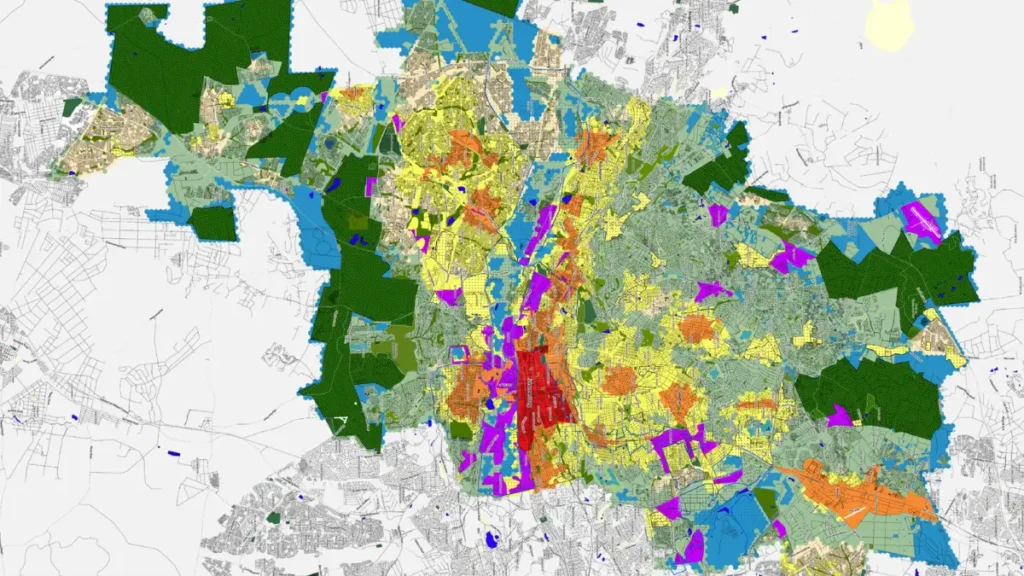
The Johannesburg Spatial Development Framework (SDF) 2040 is the overarching spatial policy document that dictates how and where the city will direct its growth, infrastructure investment, and urban densification. For developers and property owners, the SDF 2040 is the most critical benchmark against which the City of Johannesburg evaluates all new land use applications. The core objective of the SDF is to transition Johannesburg into a “compact polycentric city,” moving away from urban sprawl and heavily promoting Transit-Oriented Development (TOD). If your proposed development aligns with the SDF’s designated transformation areas and the Nodal Review policy, it is far more likely to receive municipal support. The municipality utilizes these frameworks to ensure that new developments are sustainably located near public transit networks and economic hubs. At Glensburg Town Planners, we meticulously align your motivational memorandums with the specific objectives of the SDF 2040, providing a robust, policy-backed justification that significantly strengthens your application.

In the City of Johannesburg, development controls, which include building lines, coverage, height restrictions, and Floor Area Ratios (FAR), are strictly governed by the City of Johannesburg Land Use Scheme, 2018. These regulations ensure that developments remain proportional, safe, and harmoniously integrated into their surrounding neighborhoods. Building lines dictate the minimum mandatory distance between a structure and the property boundaries or street frontages. If a developer or homeowner wishes to build closer to the boundary than the zoning allows, they must submit a formal Building Line Relaxation application. This process requires demonstrating that the encroachment will not negatively impact municipal infrastructure, stormwater drainage, or the privacy and amenity of adjacent properties. Coverage determines the maximum percentage of the land that may be covered by buildings, while FAR dictates the total permissible floor space across all storeys. Understanding and navigating these specific development controls is a highly technical exercise that we manage to optimize your architectural footprint.

Public participation is a mandatory, legally binding component of most major land use applications, including rezoning and township establishments, within the City of Johannesburg. Designed to promote transparency and protect the rights of surrounding communities, the process requires the applicant to formally notify the public of their developmental intentions. Under the CoJ Municipal Planning By-law, 2016, this typically involves publishing formal notices in the Provincial Gazette and at least one local newspaper circulating in the specific Johannesburg region. Additionally, highly visible site placards must be displayed directly on the property boundary for a minimum of 14 to 28 days, and registered letters must be sent to all immediately adjacent property owners. During this period, any interested or affected party has the legal right to submit written comments or formal objections to the municipality. If valid planning-based objections are received, the application cannot be approved administratively and must be presented before the Municipal Planning Tribunal (MPT).

The Municipal Planning Tribunal (MPT) is an independent, quasi-judicial body established under the Spatial Planning and Land Use Management Act (SPLUMA) to adjudicate complex or contested land use applications within the City of Johannesburg. While straightforward, unopposed applications can often be approved administratively by delegated municipal officials, any application that receives formal public objections must be escalated to the MPT for a final ruling. The Tribunal is composed of experienced town planners, legal experts, and municipal officials who objectively evaluate the merits of the application against the objections raised by the community or internal city departments. During an MPT hearing, both the applicant, represented by their professional town planner, and the objectors are given the opportunity to present their planning arguments, technical reports, and legal motivations. Because the MPT’s decisions are binding and legally enforceable, appearing before the Tribunal requires an indepth understanding of statutory planning law. We provide expert, robust representation at these hearings.

Trusted by South Africa’s Diverse Stakeholders

We have collaborated with a diverse range of clients, from private landowners to major institutional developers, to bring visionary projects to fruition. Explore our past work to discover how our technical due diligence and town planning expertise unlocked investment value.

  • Estate Transfer Facilitation

    Engaged by ABSA Trust to streamline the administration of deceased estates, we effectively addressed critical issues related to municipal by-law compliance and zoning regularization, ensuring the swift and lawful transfer of property assets to beneficiaries.
  • Campus Expansion & Conversion

    We facilitated the conversion of a residential property into a specialized educational campus. By securing the necessary land use rights, we ensured that School of Rock’s new music facility met all municipal compliance requirements.
  • Commercial Rights Conversion

    We secured the essential land use rights to transform a residential property into a premier commercial art space. Our rezoning services allowed Lund Gallery to operate a fully compliant retail business within a residential zone.